
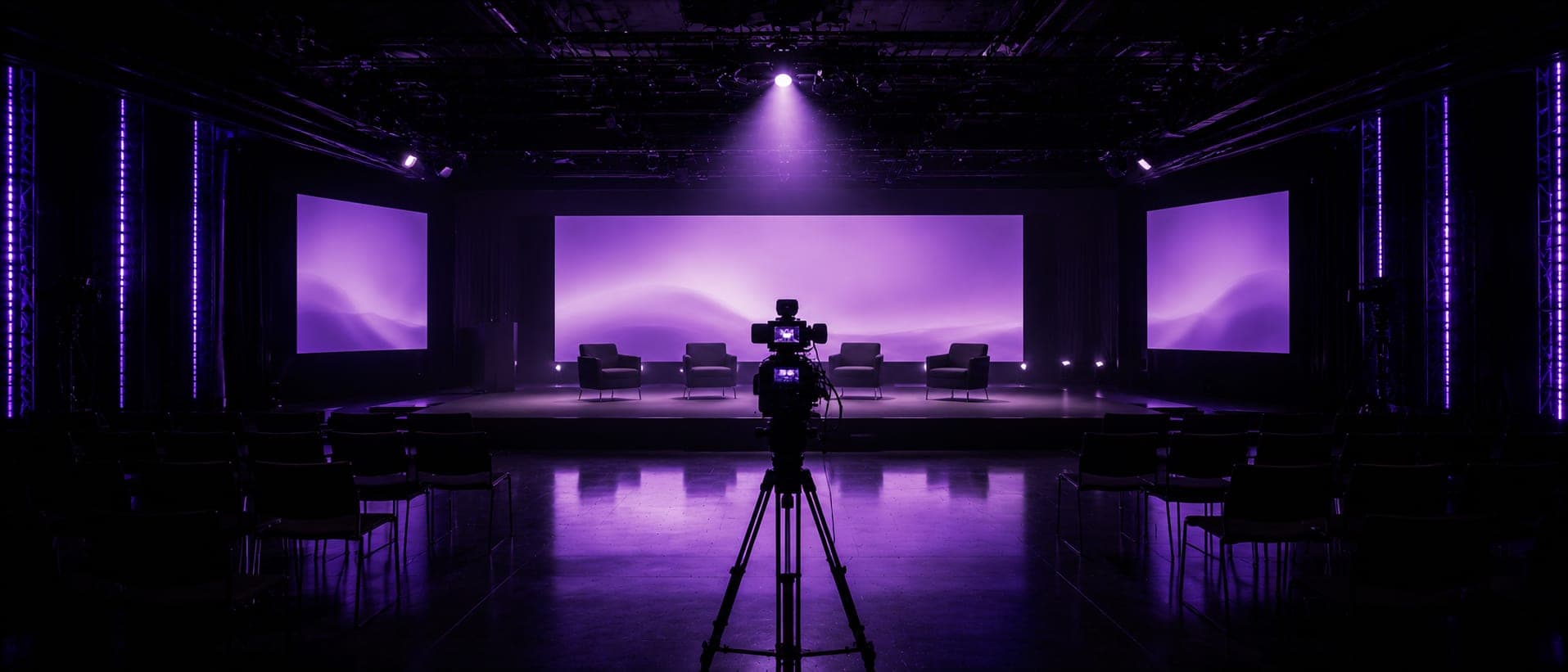
A hybrid event is not an in-person event with a camera bolted on at the last minute. It's a format that requires designing two experiences in parallel — for the people in the room and for those following on a screen — and it only makes sense when there's a real reason behind it, not just the technical possibility of doing it.
When it adds real value
- A geographically dispersed audience, where bringing everyone together physically isn't viable or economically reasonable
- Content that interests more people than the physical venue can hold
- The need to leave the content recorded and reusable after the event
When it doesn't
If the event depends on physical interaction — team building, a gala, a company dinner — the virtual version almost never replaces the experience, and the effort of producing it tends to divert resources from the in-person event without delivering an equivalent result. Not everything needs unlimited reach; some events work precisely because they're exclusive and in person.
The real cost of doing a hybrid event properly
Producing a hybrid event with real quality requires a team dedicated to the online side — cameras, a video switcher, an audio technician specifically for streaming, a platform licensed for the size of the virtual audience — on top of the in-person event's budget, not instead of it. Budgeting that as a separate line item from the start avoids the temptation to solve it with a phone on a tripod, which is why most corporate livestreams look and sound poor.
The most common technical mistake
Treating the online production as an afterthought: a single fixed camera, room audio without adapted ambient microphones, no moderator dedicated to the virtual audience. Anyone watching the event on screen notices immediately whether it's a real priority or a last-minute add-on, and that impression shapes how they perceive the content, not just the production.
Briefing the in-room team so they don't ignore the camera
A common mistake in hybrid events is that speakers and the in-person team act as if the camera weren't there: they don't look at the lens, don't repeat questions from the physical audience so they carry over into the broadcast, and ignore the virtual chat during Q&A. A short briefing for speakers on how to also address the online audience improves the experience noticeably, without any extra technical budget.
A moderator dedicated to the online audience
In hybrid events with a significant virtual audience, having someone whose sole job is to watch the chat, the questions and the experience of people following from home makes a real difference. Without that role, the virtual audience is reduced to a passive viewer of a broadcast, not a participant in the event.
Choosing a platform based on the type of interaction
Not all streaming platforms offer the same level of interaction. If the goal is simply for the audience to watch the content, a straightforward broadcast is enough. If the goal is real participation — live questions, polls, virtual breakout rooms — the platform has to support it by technical design, not as a last-minute addition.
Recording and reusable content after the event
One of the real reasons to invest in hybrid production isn't just the live audience — it's the content left over afterwards: talks that can be cut into clips for internal communications, testimonials useful for the marketing team, material reused in next year's invitation. That value only exists if the recording is planned with enough quality from the start, not treated as a byproduct of the live broadcast.
Time zones, the problem that gets forgotten
When the virtual audience is spread across different countries, choosing the event's time slot means sacrificing convenience for some region; there's no single time that works equally well for Europe, the Americas and Asia at once. Deciding consciously who gets priority, instead of setting the time purely around the physical venue, stops a large part of the international audience from being excluded by accident. Publishing the recording quickly for the regions left outside the live slot is a simple way to soften that trade-off.
The question worth asking before deciding on a hybrid format isn't "can we do this?" but "who actually benefits from having a virtual version of this specific event?"