
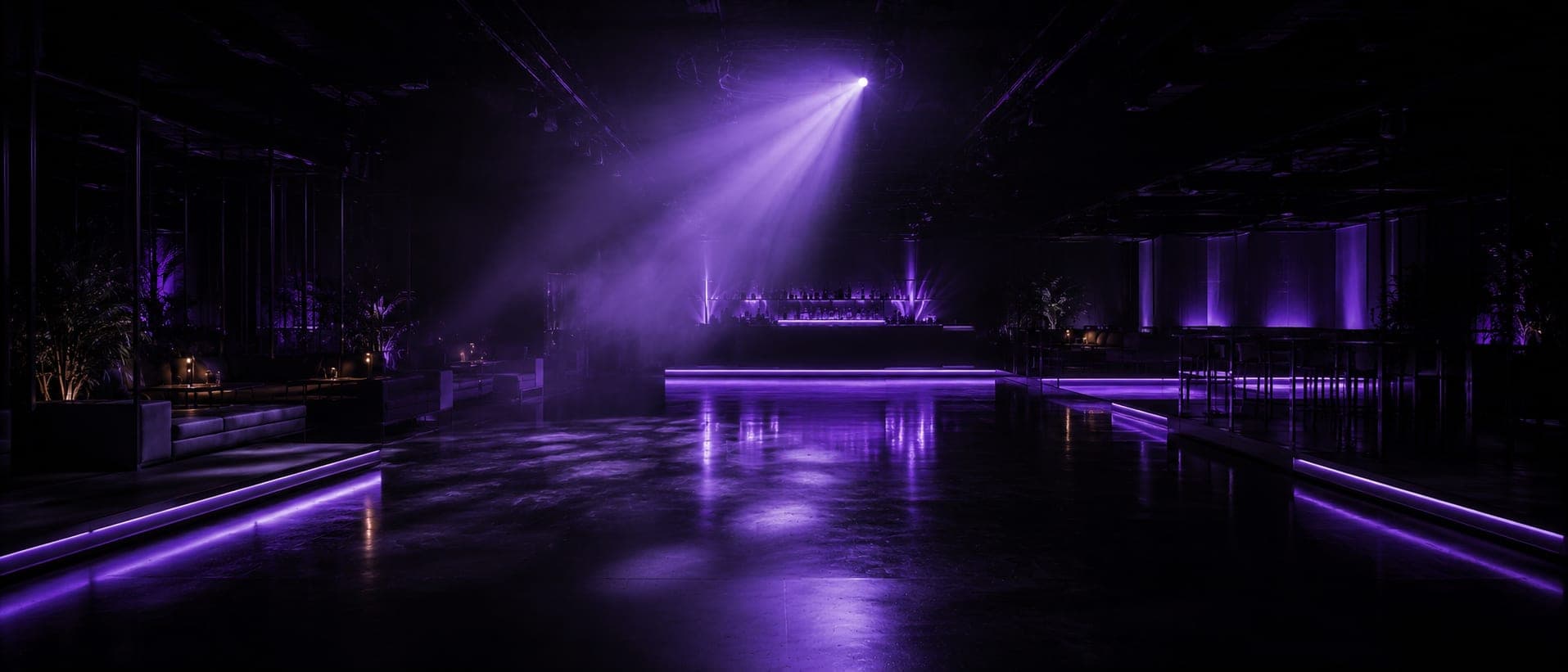
A company party is often confused with a scaled-down gala — same logic, smaller budget. That's a planning mistake. A company party has a different objective: pure celebration, with no ceremonial or formal recognition component. When it's organised with a gala's logic but without a gala's budget, the result is usually a lacklustre gala, not a good party.
Less protocol, more participation
The format that works dispenses with long speeches, rigid assigned seating and a closed programme of acts. It works better with standing or semi-informal spaces, music that invites people to move from the start, and an active bar from arrival, not just during dinner if there is one.
Informal catering, not a gala menu
A cocktail with active food stations — foodtrucks, a snack bar, themed stations — fits better than a menu served at the table. It cuts dead time and makes it easier for people to move around and mix between departments, which is usually one of this type of event's implicit goals.
Music and DJ: what to consider
Music style decides more than any other element whether the dance floor fills up or stays empty. A DJ who knows the team's demographics — age range, background, dominant tastes — programmes better than one following a generic hits list. It's worth fixing an initial softer block in advance, for the first hours of conversation and dinner, and saving the build-up to more danceable music for when most of the group has already relaxed. Volume matters too: too loud from the start makes conversation impossible and puts off anyone not ready to dance yet.
Open bar: managing it responsibly
A well-run open bar isn't just serving without limits. It means calculating the bartender-to-guest ratio to avoid queues that generate frustration, setting a reasonable bar closing time before the event ends, and arranging transport home — taxis, shuttle buses — for anyone who can't drive. A company that runs an open bar without a transport plan is taking on a risk that goes beyond the event budget.
The most common mistake
Trying to make the company party serve several goals at once — celebration, recognition, communicating results — dilutes all three. If there's something to recognise or communicate, it's better handled in a brief, contained moment at the start, leaving the rest of the night free of agenda.
Activities and dynamics: optional, not mandatory
Photo booth, karaoke, a casino table, a photocall: added activities work better as something people join freely, not as a scheduled activity that interrupts the party to make everyone participate at once. Forcing participation — microphone game rounds, mandatory group dynamics — has the same effect as a long speech: it cuts the mood that's been building.
Choosing the right date
A company party on a weeknight sets the closing time and next-day attendance levels. A weekend date widens the time window but can clash with part of the team's personal plans. There's no universally better date — it depends on each company's culture and on whether the goal is maximum attendance or maximum disconnection from the work routine.
How long the party should last
A company party that runs too long loses energy in the final hour, once part of the group has already left and the dance floor slowly empties out. Four to five hours of active programme — cocktail, dinner if there is one, music and bar — is usually enough to keep the energy up from start to finish without artificially stretching the closing time. Ending at the high point, rather than letting it fizzle out on its own, leaves a better impression than dragging the event on until the room is half empty.
Budget items that get forgotten
Beyond catering, music and the venue, it's worth budgeting for the event's public liability insurance, extra staff hours at the venue if the party runs long, and transport if the venue isn't easily reachable by public transport. These are small items individually but combined can represent a significant share of the total budget if they're not accounted for from the start.
Case study
Zeptolab Gala GatsbyGatsby-themed gala for Zeptolab in Barcelona, with art direction, themed wardrobe and a party experience built around a single visual concept.
A company party people remember isn't the most expensive one. It's the one that doesn't make anyone behave as if they were in a work meeting with music playing in the background.