
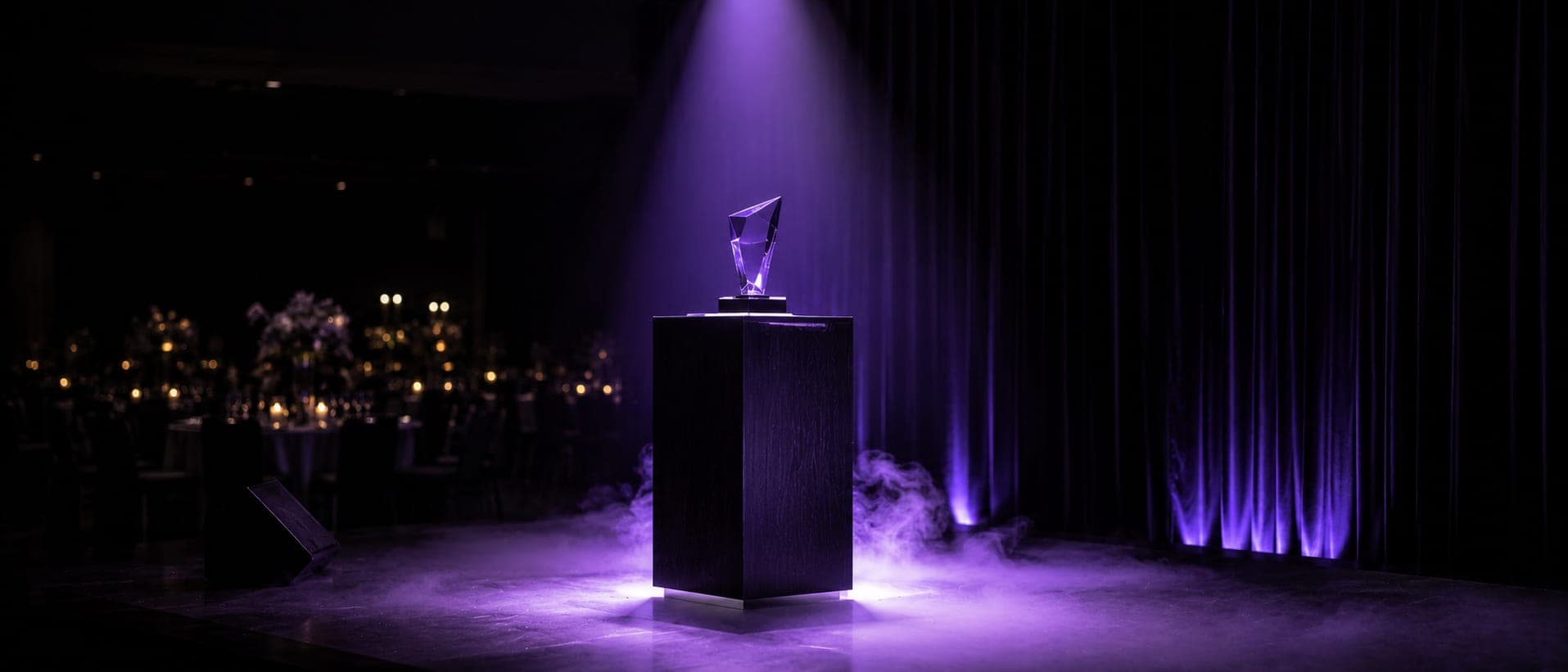
A company gala is the corporate event format with the highest ceremonial weight. It is organised to celebrate an anniversary, present awards, recognise achievements, or mark the close of a cycle. Production is more complex than a standard dinner because it includes a staging component — stage, lighting, programme of acts, hosting — that shapes the entire setup.
Define the purpose before designing the format
A gala can have several purposes: recognising the sales network, celebrating a company anniversary, rewarding suppliers or clients, or marking an internal milestone. The purpose determines the tone — more festive or more institutional — the programme of acts, and the production budget.
The event concept
A gala with a concept has a visual and narrative thread running through every element: the invitation, the space décor, the welcome address, the entertainment, the event gifts or mementos. Without a concept, the event is an accumulation of elements without coherence. The concept does not need to be elaborate: a colour, a theme, a visual reference consistently executed is enough to give everything coherence.
Choosing a theme or keeping it classic
Not every gala needs a fixed theme — the 1920s, Gatsby, a country, a decade. A classic format with good lighting, a carefully considered menu, and a well-paced programme of acts can work just as well, and it avoids the risk of the theme staying in the décor without permeating the rest of the experience. When a theme is chosen, it has to be applied consistently: suggested attire, music, styling, and even the language of the invitations. A half-applied theme feels more forced than no theme at all.
Case study
Zeptolab Gatsby GalaA 1920s Gatsby-style themed gala for the Zeptolab team in Barcelona, with attire, styling, and entertainment consistent with the period.
Venue and setup
For a gala, the venue needs a distinct space for the welcome cocktail if there is one, a dining area with table layout, and a stage for the acts. Ceiling height matters for the lighting rig and for staging and screens to be visible from anywhere in the room. Acoustics matter for speech intelligibility. A site visit with the technical production team before contracting is standard practice for events of this kind.
Programme of acts and minute-by-minute schedule
The programme of acts is the skeleton of the evening. It covers the timing of each element: arrival and cocktail, welcome, dinner, intermissions, performances or activities, award presentations if any, closing and farewell. The minute-by-minute schedule is the operational version: with exact timings, responsibility for each transition, and communications between the stage director, the sound engineer, and catering. At galas for more than 200 people, the minute-by-minute schedule is essential to maintain pace.
Event hosting
The presence of a host — presenter, master of ceremonies — makes a difference at events with a programme of acts. The host organises transitions, brings a natural feel to the more institutional moments, and handles unscripted situations without the audience noticing. They can be an external professional or someone from within the company with strong stage presence and the ability to improvise.
Case study
Louis Vuitton Summer Party 2018Summer gala for 1,275 Louis Vuitton employees at Masía Montcorp in Riudarenes, Girona.
Entertainment
Entertainment at a gala can range from a live band or DJ to specific performances — magic, theatre, dance, stand-up comedy. The choice depends on the event's tone and the profile of the attendees. What works at a gala for a young tech company may not work at a gala for a distribution network with very different profiles. There is no universal formula: entertainment must be tailored to the audience.
Dress code
The dress code is communicated in the invitation, not improvised on the day. Formal, cocktail, black tie, or themed: each option shapes the tone of the photography, the styling, and even the layout of the space. At companies with very international workforces or very different employee profiles, it is worth being explicit about what is expected, because cultural references for what counts as "formal" vary. Giving one or two concrete attire suggestions in the invitation reduces uncertainty and stops part of the audience from feeling out of place.
Real organisation timelines
A well-produced gala for more than 100 people needs between two and three months of planning if the venue is available and the budget is approved from the start. With less time, it is possible to organise, but the selection of venue, catering, and technical production becomes more constrained.