
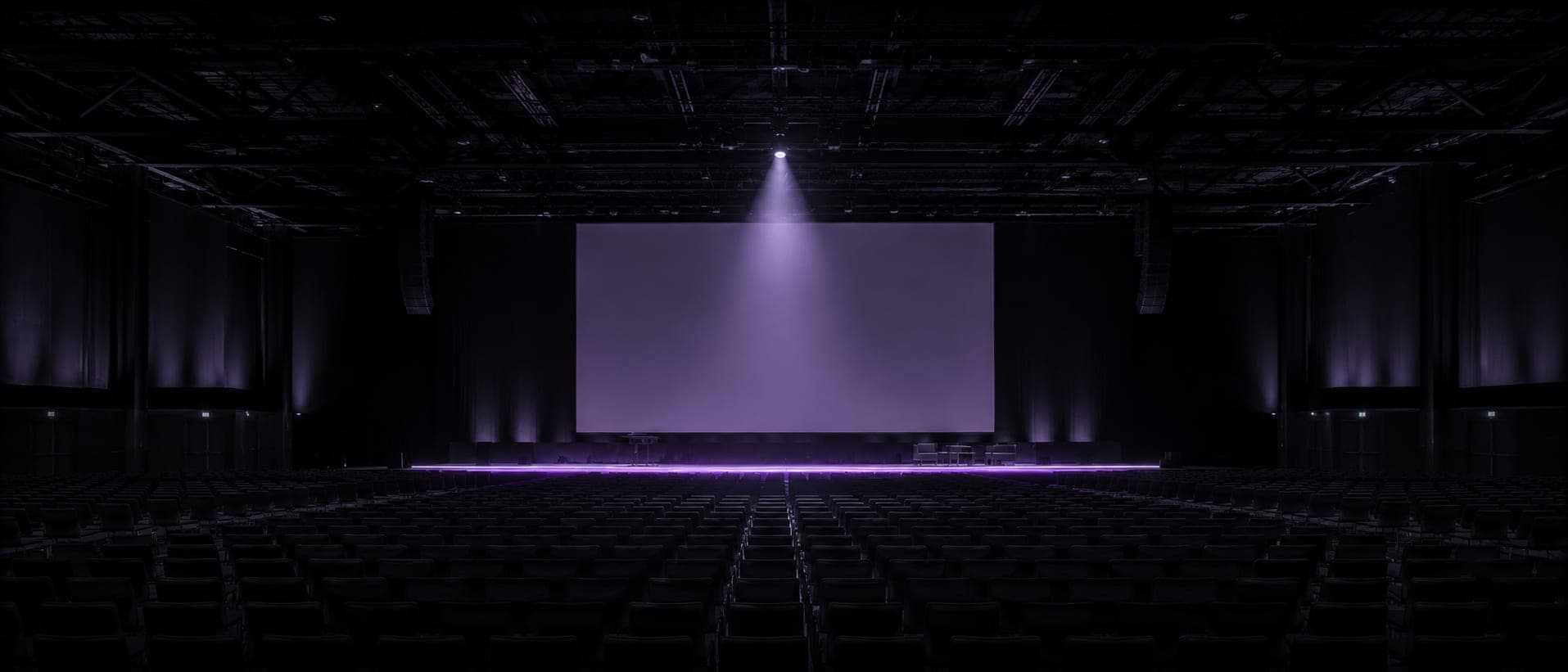
A corporate congress isn't a bigger convention — it's a different type of event, with its own production logic. While a convention brings together the same team with a single programme, a congress convenes an entire sector, with attendees who don't know each other and a programme competing for their attention across several parallel sessions.
A multi-track programme
Most congresses of a certain size organise content into parallel tracks — simultaneous sessions in different rooms, aimed at different attendee profiles. This requires rooms with real acoustic isolation, clear signage so no one gets lost between sessions, and a timetable that allows margin for moving between rooms.
Choosing a venue: room count before total capacity
The most common mistake when scouting a venue for a congress is looking at the main hall's capacity first and treating the track rooms as an afterthought. It should be the other way round: without enough parallel rooms, with real acoustic isolation and reasonable proximity to each other, a multi-track programme doesn't work no matter how well it's designed on paper. It's worth visiting the venue with the track programme already sketched out, not before, to confirm the physical layout of rooms matches the number of simultaneous sessions planned.
Registration and pricing management
Paid-entry congresses need a phased pricing system — early bird, standard rate, last-minute rate — and a registration platform that handles payments, invoicing and attendee substitutions without relying on manual spreadsheets. Cancellation and refund policy should be clear from the outset: it's one of the most common sources of friction with attendees when a last-minute issue comes up.
Accreditation and access control
With hundreds or thousands of attendees, accreditation stops being a desk with a printed list. Congresses of this size run on prior online registration, QR codes or wristbands with room-by-room access control, and a team dedicated exclusively to resolving accreditation issues on the day — duplicate profiles, last-minute guests, capacity changes.
External speakers: a different kind of management from an internal event
An external speaker isn't an employee stepping onto a stage. They need a technical requirements sheet (audiovisual, preparation time, travel requirements), a briefing on the event's tone, and a single point of contact throughout the process. Speaker coordination is, in practice, a project within the project once there are more than five or six external speakers.
Simultaneous interpretation
When there are international speakers or attendees from several countries, simultaneous interpretation stops being an extra and becomes part of the congress's infrastructure. It requires soundproofed booths, dedicated sound technicians and receivers for every attendee who needs them, plus professional interpreters experienced in the specific sector — badly translated technical terminology in real time causes more confusion than no translation at all. It needs booking weeks in advance: reputable interpretation teams get reserved early.
Streaming and hybrid content
Congresses are the format where streaming makes the most sense: it extends reach beyond the room's physical capacity and generates reusable content after the event. It requires its own technical planning — number of cameras, platform, the venue's connection quality — that can't be improvised the week before.
Sponsors and exhibitor spaces
Many sector congresses include a sponsor or exhibitor area, which functions almost like a small fair within the congress itself. This adds a layer of management: sponsorship contracts with tiered visibility levels, floor plans that distribute space fairly between brands, and access hours to the exhibitor area that don't compete directly with content sessions, so neither one empties out the other.
Catering for large volumes
Serving food to several hundred attendees in a thirty-minute break requires a different format from a small convention: several simultaneous stations instead of one, staff calculated per service point, and a circulation flow designed to avoid bottlenecks between rooms and the catering area.
What happens after the congress
A congress doesn't end when the last speaker leaves the stage. Sending recorded sessions and materials to registered attendees within a few days keeps the event's value alive well past the closing date, and a short satisfaction survey sent while the experience is still fresh gives usable data for the next edition — response rates drop sharply after the first week. Treating this follow-up as part of the production, not as an afterthought, is what separates a congress with lasting reach from one that's forgotten the following Monday.
The difference between a well-produced congress and a chaotic one is rarely in the content of the talks. It's in whether the attendee finds their room, arrives on time, and doesn't have to queue for twenty minutes to get accredited.