
A sales team lives on competition and recognition for results, day to day. Team building designed for this profile doesn't need to avoid competitiveness as if it were a risk — channelled well, it's exactly what hooks this kind of team more easily than other profiles.
Activities with a ranking and a visible result
Activities with clear scoring, a real-time visible leaderboard and a declared winner at the end connect better with sales teams than purely collaborative activities with no measurable result. The prize doesn't need to be financial — public recognition of the result is usually motivation enough.
Tying the activity to real sales data, carefully
Using real sales figures as the basis for an activity — who closed the most deals, which branch grew the most this quarter — generates more buy-in than a game with made-up scoring, because it connects directly to what the team already measures every week. The risk is turning team building into a disguised performance review: it helps to make clear that the day is about competing in a new activity, not auditing the quarter.
Don't let the same profile win every time
If the activity rewards pure sales skill only, the usual top performers win again and the rest of the team disengages. Introducing a challenge that depends on a different skill — speed, creativity, teamwork — within the same competitive format gives real odds to different profiles and keeps the activity from turning into a repeat of the usual sales ranking.
Mixing teams, not reinforcing the usual sales hierarchy
Forming the activity's teams by mixing branches, sales territories or seniority levels — rather than letting each sales team compete as a closed block — creates new relationships between people who normally compete against each other day to day, instead of just reinforcing existing rivalry.
The sales manager's role during the activity
The team's manager shouldn't just watch from the sidelines. Taking part as one more competitor, rather than supervising from a distance, sends a different message than staying on the margins — and it's often the moment the team sees them with more closeness than at any formal meeting all year.
Group size changes the format of the competition
A competitive activity designed for fifteen salespeople doesn't scale the same way to a team of a hundred and fifty. With large groups, splitting into several elimination rounds or multiple simultaneous stations keeps each person's actual level of participation up; a single challenge with a hundred and fifty people watching ends up leaving most of them as passive spectators rather than active competitors.
What kind of prize actually works with this profile
A salesperson gets financial incentives constantly as part of the job, so a prize in the same vein — a gift card, a bonus — rarely adds much differential value at a team-building event. An experiential prize, something the winner wouldn't buy for themselves, or public recognition in front of the rest of the company usually generates more real satisfaction than one more financial incentive.
Close with explicit recognition
A brief closing moment where sales leadership recognises both the winning team and the general effort of everyone else has more impact on this profile than on others — for many salespeople, public recognition is valued as much as any material incentive.
Case study
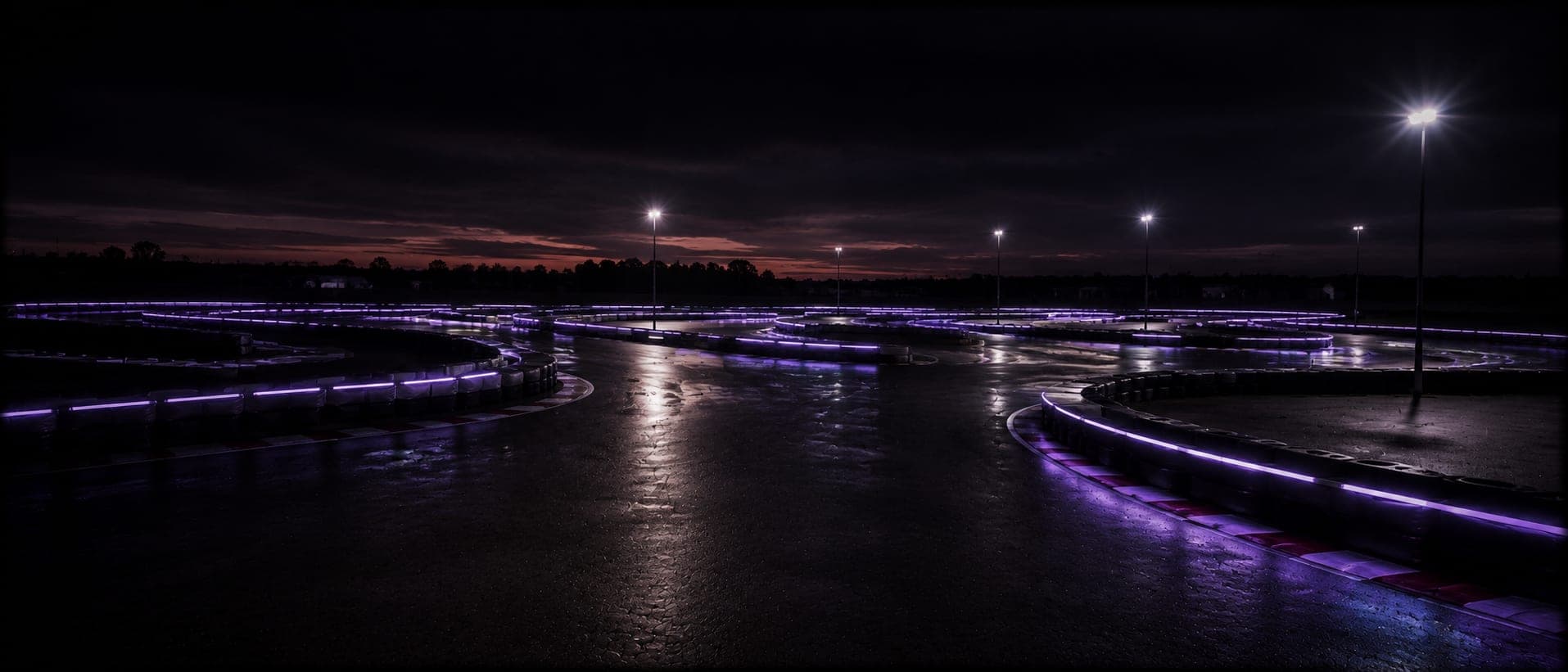
Novarama SummerA team evening with lighting and sound treated as a central part of the experience — an example of how production can generate competitive energy without relying only on the content of the activity.
Frequency: not worth repeating every quarter
Competitive team building loses its pull if it's repeated too often — novelty and the sense of a special event are part of what drives engagement. Once or twice a year, timed to a goal close-out or a campaign kick-off, keeps the format as something the team looks forward to rather than one more routine on the sales calendar.
Follow-up afterwards reinforces the effect
The motivational effect of competitive team building for a sales team fades fast without any follow-up. Mentioning the winning team's result at the next sales meeting, or keeping the ranking visible for a few weeks, extends the effect of the activity well beyond the day of the event itself and reinforces the memory of it across the whole team.
The team building that works best for a sales team isn't the most sophisticated in concept. It's the one that lets them compete and earn recognition for it, in a different context than the usual one.