
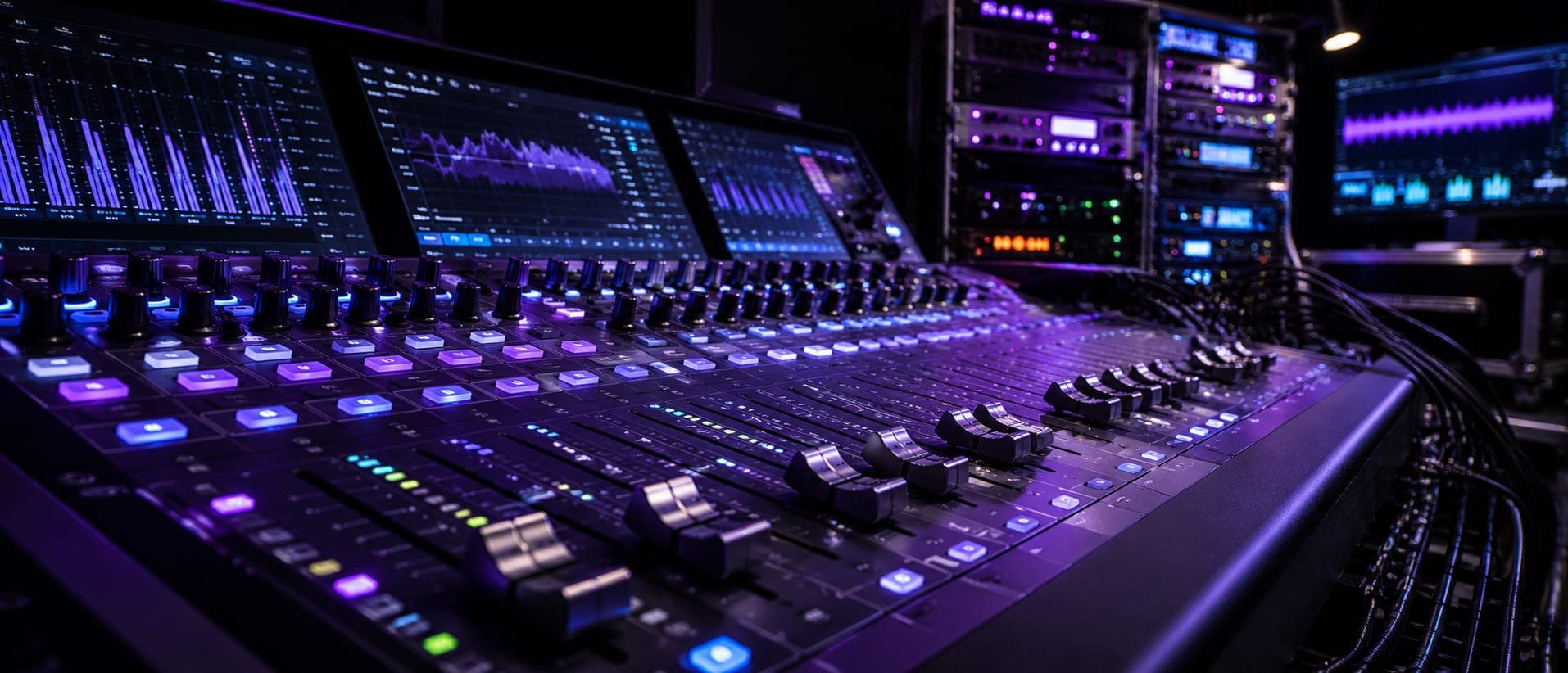
Audiovisual production is the technical component of an event that has the most impact on how attendees perceive it and, at the same time, the one with the widest cost variation. Two events with the same attendance and the same catering can have audiovisual productions with very different costs depending on what is decided for sound, lighting, screens, and content.
What audiovisual production includes
- Sound system (microphones, mixing desks, room and monitor speakers)
- Lighting (ambient, stage, effects for entertainment and animation)
- Video (LED screens or projection, programme cameras, streaming if applicable)
- Video content (montages, animations, motion graphics presentations)
- Operations (sound, lighting, and camera direction technicians)
Sound: the foundation of everything
Sound is the line item that most affects the perceived quality of an event and, at the same time, the one most frequently undervalued. A room with poor acoustics needs more equipment and more calibration time. A speaker with a lapel microphone that sounds bad undermines the credibility of what they are saying. Good sound goes unnoticed; bad sound is the first thing attendees comment on.
Lighting: atmosphere and function
Lighting serves two purposes: creating the visual atmosphere of the event and ensuring visibility where it matters — stage, presentation areas. Purely ambient lighting can be too dim for photography or video. Purely functional lighting can make the space feel cold. The balance between the two depends on the type of event and whether photo or video coverage is planned.
Screens and video content
Screens extend the stage: they allow attendees at the back of the room to see what is happening on stage, give visual support to presentations, and can become a decorative element when not in active use. The content projected on them — animations, countdowns, titles, corporate videos — needs to be produced in advance, with the review and approval timelines that requires.
Case study
BMW Conquista el CieloFull audiovisual production for the BMW iX launch: LED screens, outdoor sound system, and video coverage of the airshow.
Streaming
Streaming allows remote audiences to participate in the event in real time. Quality depends on the venue's internet connection, the number of cameras, and the platform used. A poorly produced stream — choppy picture, poor sound — has a negative impact on how remote attendees perceive the event.
Outdoor audiovisual production
Outdoor events add variables that do not exist indoors: protecting equipment from rain or wind, generators or stable power connections, and a different sound power calculation because there are no walls to contain the sound. Screen visibility also changes: outdoors and in daylight, more luminance (measured in nits) is needed for content to read clearly. These factors need to be reviewed with the technical team during the site visit, not on the day of set-up.
Audiovisual budget: what ranges to expect
Audiovisual production costs vary widely by attendance and specification. For a room of up to 150 people with sound, a support screen, and basic lighting, the indicative range sits between 3,000 and 6,000 euros. For events of 300 to 500 people with LED screens, stage lighting, and programme cameras, the range rises to between 10,000 and 25,000 euros. Adding professional streaming or bespoke audiovisual content — videos, animations — can add between 20% and 40% on top of the base budget. Always asking for a breakdown by line item, not just a single figure, makes it possible to see where there is room to adjust.
Common mistakes in audiovisual production
The most common mistake is not doing a sound check with the actual speaker before the event: everyone has a different volume and speaking style, and adjusting the system live creates unnecessary tension. The second is underestimating set-up time: a medium-sized production needs between 4 and 8 hours of set-up beforehand, and compressing that time increases the risk of technical failures during the event. The third is not planning for sufficient power supply, especially outdoors or at venues not used to hosting events: a power cut halfway through an act is one of the most visible and most avoidable incidents.
How to make audiovisual decisions without exceeding the budget
The key is prioritisation. At an event with speakers and presentations, sound and visual support for the presentations are non-negotiable. Effects lighting or programme cameras are elements that can be scaled back if the budget requires. Starting from the need and building upward is more efficient than starting from the maximum proposal and cutting down.