
When a company starts planning an event, one of the first decisions is naming what it wants to do. That name matters because each type of corporate event implies a distinct production logic, a different budget, and a specific set of suppliers. Here the most common formats are described with their real characteristics.
Conventions and kick-offs
These are internal events that bring together part or all of the workforce for strategic communication purposes. Kick-offs mark the start of a period — a fiscal year, a campaign, a new cycle — and serve to align objectives. Conventions are broader, can last a full day or several days, and combine working sessions with social activities. Production includes staging, audio and video systems, and often travel and accommodation management.
Galas and company dinners
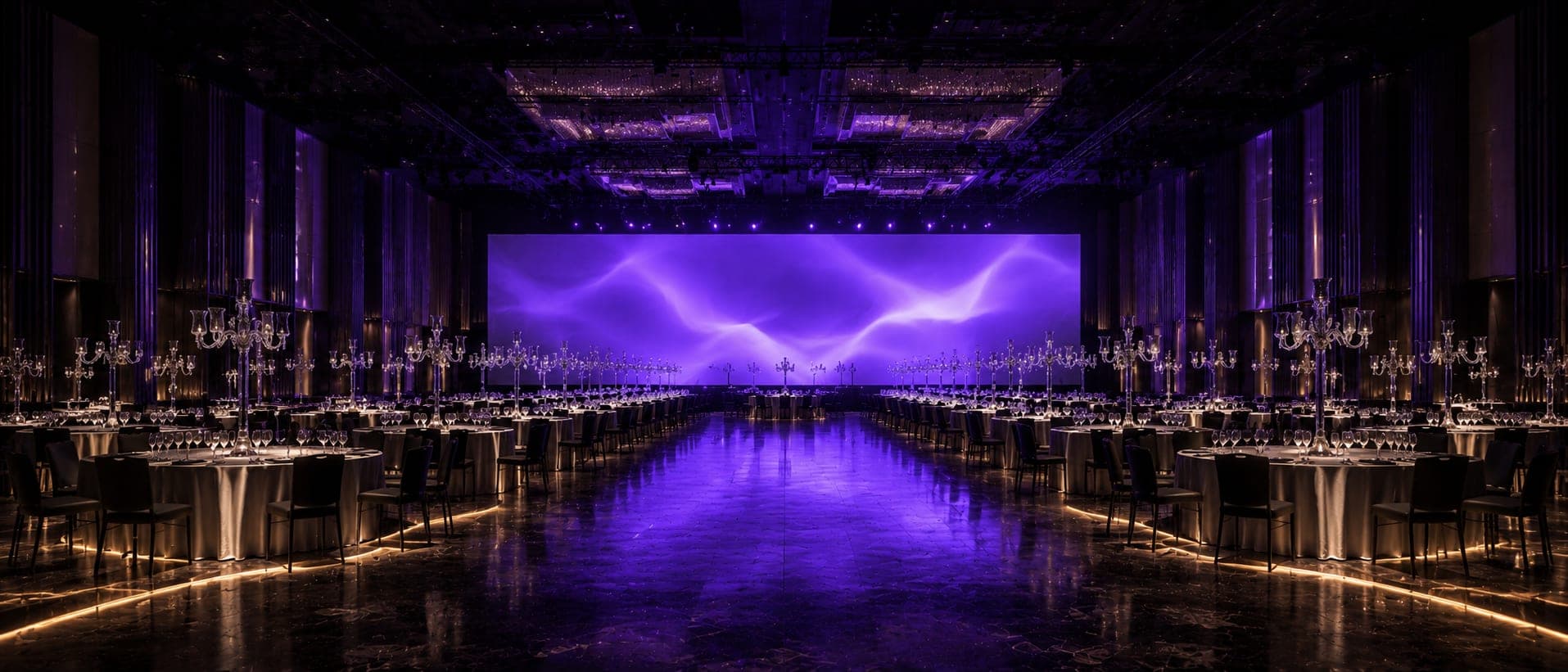
Galas are recognition or celebration events with a ceremonial component. They are held in venues with capacity for table-style layouts, seated catering service, and a stage for performances or award presentations. The company end-of-year dinner falls into this category, as do anniversary galas or client events with a more formal tone.
Team building
Its objective is team cohesion or work on specific competencies — communication, leadership, collaboration — through dynamics or activities. It differs from other event formats in that the focus is on active participation by attendees, not on the reception of content. The format can be outdoor, indoor, digital, or hybrid.
Case study
Fluendo KartingA team building day with karting for the Fluendo team at the Circuit de Catalunya.
Product presentations and launches
These events are designed to communicate a new development — product, service, brand — to media, distributors, clients, or employees. The focus is on communication impact: what is said, how it is visualised, and what feeling remains at the end. Audiovisual production carries more weight here than in other formats.
Case study
BMW Conquista el CieloLaunch of the BMW iX in a spectacular airshow format over the Mediterranean.
Trade shows and stands
Participating in trade shows involves projecting the brand in a shared physical space alongside competitors. Stand design and construction, graphic material management, and preparing the sales team for the event are the main variables. The return from a trade show depends as much on the space as on what happens inside it.
Case study
BayWa Stand GENERADesign and construction of the BayWa stand at the GENERA trade fair in Madrid.
Conferences and technical forums
Conferences have a more academic or technical profile: speakers, panel discussions, parallel sessions. Registration management, the content programme, and room logistics are the core elements. Larger formats add press management and live streaming.
Client events and institutional relations
This ranges from working breakfasts to field days for client portfolios. The tone is more informal and the budget is usually lower than for galas or conventions, but the logistics require the same level of care.
Family days
Family days bring employees and their families together outside the work environment, with a goal of building attachment to the company rather than developing teamwork. Production looks closer to a leisure event: activities for children, informal catering, entertainment, and logistics built around family-friendly time slots — weekends, full mornings. The cost per person is usually lower than a convention, but total headcount can be higher because it includes guests of every age, which means designing activities that work for very different audiences at once.
Case study
Pirelli Family DayA family day for Pirelli at Mont Sant Benet, with parallel activities for adults and children within the same space.
Themed parties and brand events
Some events do not fit any of the categories above because their purpose is to build a brand narrative through a complete environment: a period-style party, a launch with its own visual universe, a celebration with a recognisable storyline running through it. Here artistic production — set design, costume, themed lighting — carries as much weight as standard logistics. This format demands more pre-production time than a typical event, because every visual element has to support the chosen narrative, not just decorate the space.
Hybrid and digital formats
When part of the audience cannot travel, the event adds a streaming or remote-participation component. This is not simply filming what happens in the room: it requires a content script written for two distinct audiences, a multi-camera audiovisual production, and a moderator who handles questions from the in-person and remote audiences separately. The added technical cost pays off when the alternative is excluding a meaningful share of the audience, which is common in companies with offices across several countries.
How to decide which format is right
Format is not the starting point — it is the outcome of the objective. Before deciding whether to organise a dinner or a team building, it is worth answering what you want to achieve, who is attending, and how much time the team has available to organise it. From there, the format follows more naturally.